Atlantic islands3 min read
Elizabeth Castle stands just offshore from Jersey, where the route changes with the tide. Jersey Heritage offers castle information and ferry arrangements, while Jersey Coastguard explains the causeway risk. Read those sources together: seeing exposed ground does not establish that a complete outward and return visit fits the available conditions.
Read the guide ↗
Atlantic islands3 min read
The Little Chapel at Les Vauxbelets combines a miniature religious building with an extraordinary decorated surface. Visit Guernsey traces its construction and later care. Looking closely at materials, scale and successive work reveals more than treating the chapel as a quick photograph of something unusually small.
Read the guide ↗
Atlantic islands3 min read
The Great Laxey Wheel on the Isle of Man was built to solve a mine-drainage problem. Manx National Heritage explains how hillside water drove a mechanism that removed water from below ground. Follow that chain of energy and motion to turn a landmark visit into an understandable engineering lesson.
Read the guide ↗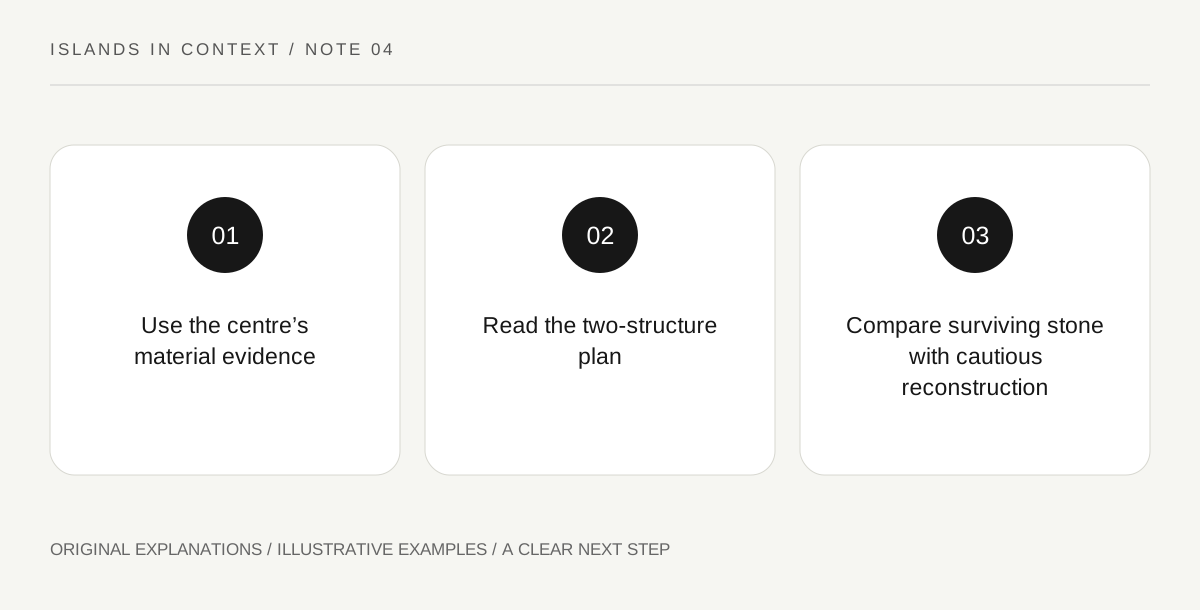
Mediterranean islands3 min read
Ggantija Archaeological Park on Gozo combines an interpretation centre with prehistoric structures outside. Heritage Malta describes both as parts of the visit. Use the indoor evidence to ask better questions about the surviving walls, materials and spaces, while keeping archaeological interpretation distinct from what is visibly preserved.
Read the guide ↗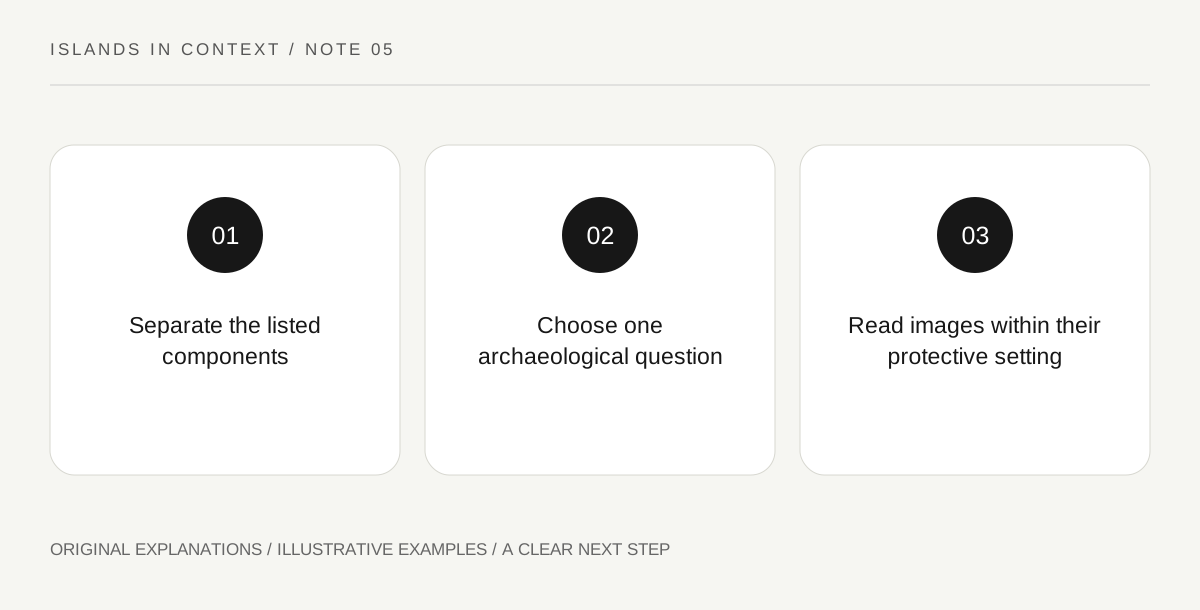
Mediterranean islands3 min read
Paphos is a World Heritage property with distinct archaeological components, not a single room of mosaics. UNESCO identifies remains at Kato Paphos and Kouklia. Understanding that structure helps an island visitor choose a focused cultural question without confusing a site name with one entrance or one continuous walking area.
Read the guide ↗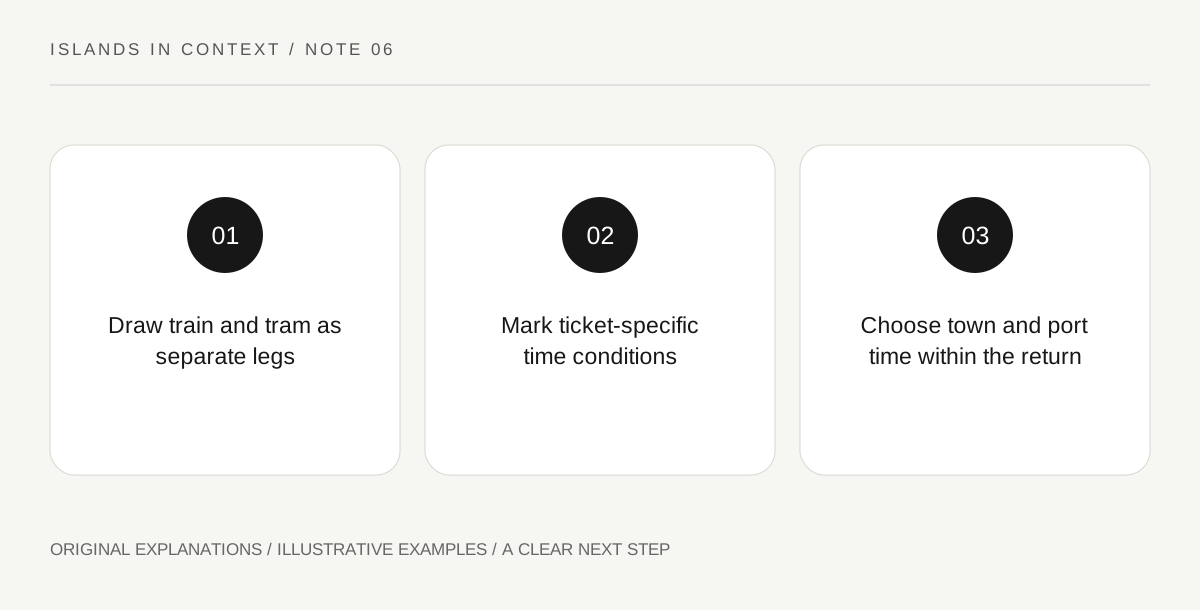
Mediterranean islands3 min read
A trip advertised with a train and a tram can sound like one continuous railway journey. Ferrocarril de Soller’s operator FAQ distinguishes the Palma–Soller train from the tram onward to the port. Read the ticket’s conditions for each service so a coastal stop does not accidentally conflict with the booked rail journey.
Read the guide ↗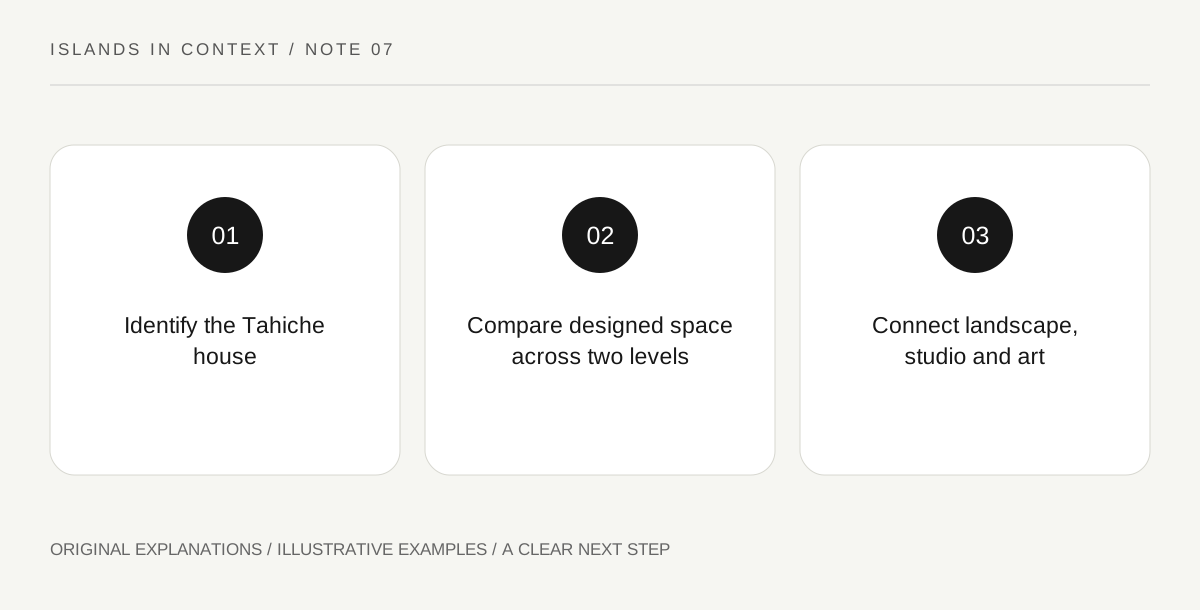
Atlantic islands3 min read
The Cesar Manrique Foundation occupies the artist’s former house at Tahiche, built into a Lanzarote lava landscape. The foundation describes an upper level informed by island architecture and a lower level using natural volcanic bubbles. Read the house as a deliberate relationship between geology, domestic space and artistic decisions.
Read the guide ↗
Atlantic islands3 min read
On Pico in the Azores, small basalt-walled plots form a striking pattern near the rocky coast. UNESCO explains that these currais protect vines from wind and salt spray. Read the landscape as a system of farming, movement and trade rather than a decorative grid laid out for visitors.
Read the guide ↗
Atlantic islands3 min read
Cidade Velha on Santiago in Cabo Verde preserves parts of the former Ribeira Grande. UNESCO links its streets, churches, fortress and pillory with Atlantic colonial expansion, enslavement and the development of Creole culture. A careful visit connects the surviving forms with that history instead of presenting the town only as an attractive old port.
Read the guide ↗
Indian Ocean islands3 min read
At Port Louis, Aapravasi Ghat preserves remains of an immigration depot associated with indentured labour. UNESCO connects this small waterfront site with a far-reaching nineteenth-century system and the memories of descendants. Read the surviving spaces as evidence of arrival, administration and movement rather than as an ordinary historic harbour building.
Read the guide ↗
Indian Ocean islands3 min read
Stone Town on Unguja is a living Swahili coastal trading town. UNESCO describes a distinctive combination of building materials, courtyard houses, carved doors and narrow streets. A focused walk can connect those physical details with Indian Ocean exchange while respecting the homes, shops and religious places that continue to function there.
Read the guide ↗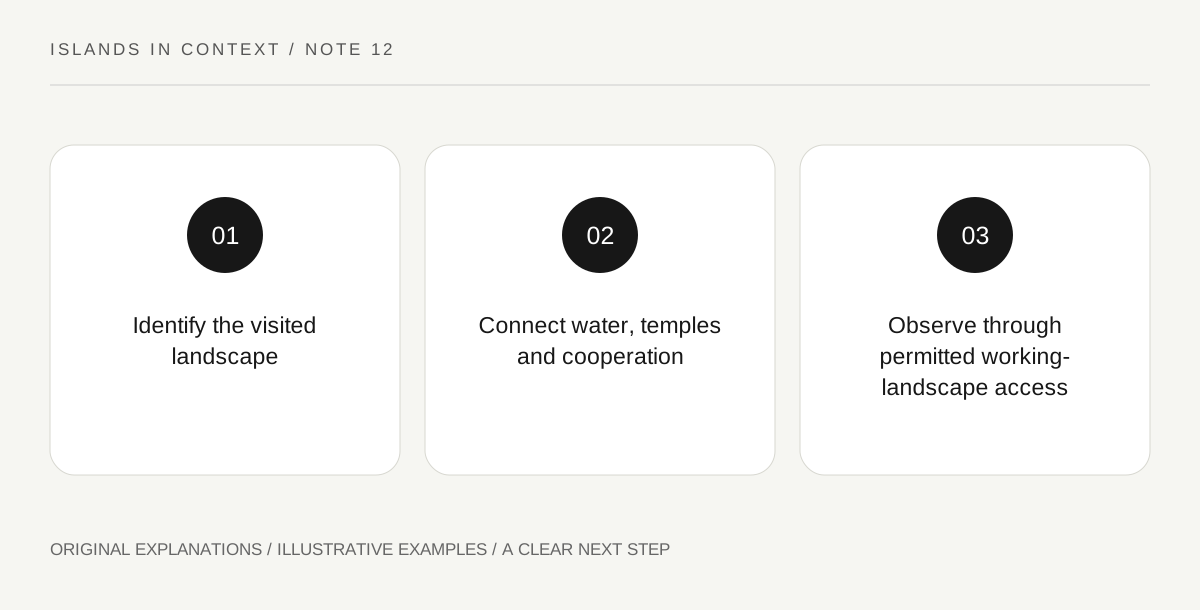
Pacific and Asian islands3 min read
A rice-terrace photograph shows only part of Bali’s subak landscape. UNESCO describes a cooperative system connecting water temples, canals, weirs, fields and community organisation. Understanding those relationships gives an island visit a clear learning purpose without treating working farmland or sacred space as an unrestricted scenic attraction.
Read the guide ↗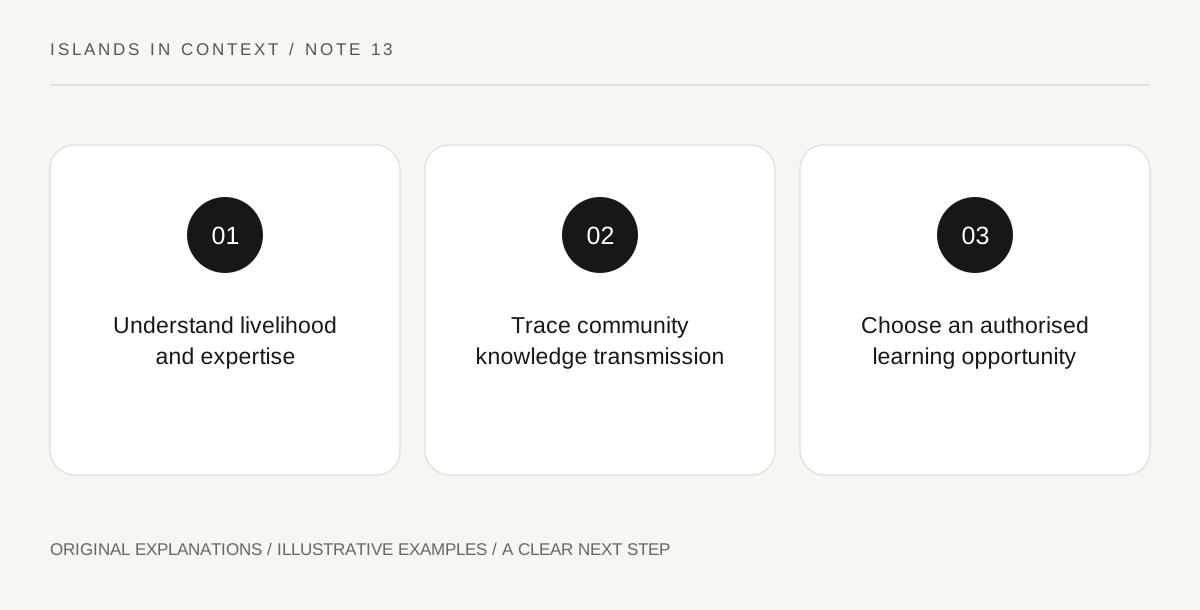
Pacific and Asian islands3 min read
Jeju’s haenyeo culture concerns women who harvest from the sea, transmit knowledge and organise work within a community. UNESCO’s intangible-heritage record describes those relationships. Learn through interpretation and authorised cultural opportunities rather than treating working divers as an attraction that must appear at a fixed time for visitors.
Read the guide ↗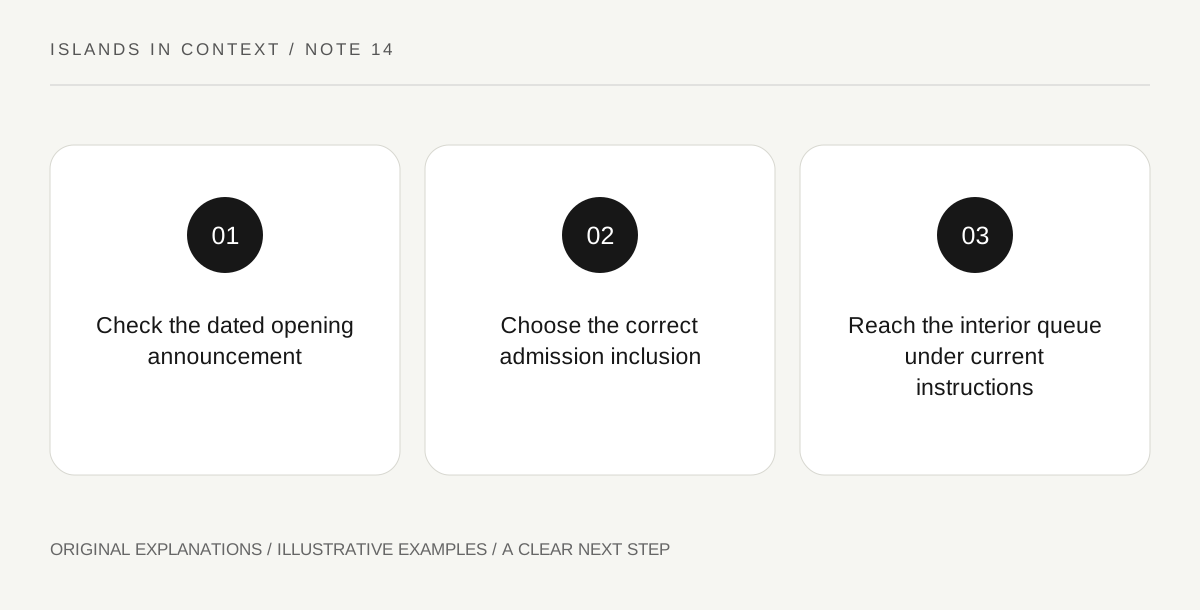
Pacific and Asian islands3 min read
Shurijo Castle Park’s official ticket guidance distinguishes the paid grounds from the restored Seiden interior. As checked on 20 October 2026, the park announces interior opening for 23 November 2026 with dated, timed reservations. Read that as a future announced arrangement and match the admission product to the part you intend to see.
Read the guide ↗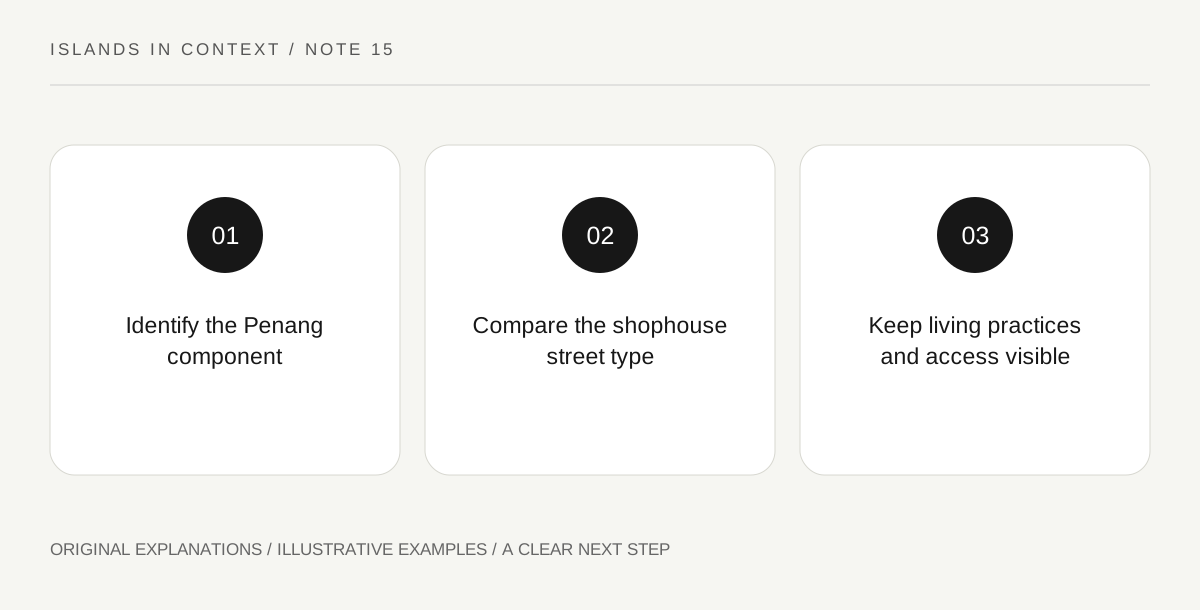
Pacific and Asian islands3 min read
George Town on Penang forms one part of a joint World Heritage property with Melaka. UNESCO emphasises its trading history, shophouses and living multicultural heritage. A focused street reading can reveal relationships between commerce, residence and community life without turning occupied buildings into an unrestricted open-air museum.
Read the guide ↗
Caribbean islands3 min read
El Morro and San Cristobal belong to San Juan’s wider fortification system, but their settings and defensive questions differ. The National Park Service explains how the harbour entrance, land approaches and city walls fit together. Read the two forts as related parts of a system rather than interchangeable castle photographs.
Read the guide ↗
Caribbean islands3 min read
Willemstad’s colourful waterfront is one part of a larger heritage city. UNESCO identifies four historic districts arranged around a natural harbour that remains active. A focused visit compares urban form and the relationship with water, instead of treating a single row of facades as the whole story of Curacao’s capital.
Read the guide ↗
Indian Ocean islands3 min read
Reunion’s interior heritage landscape contains volcanic peaks, steep walls and large cirques. UNESCO explains their geological and ecological significance. Understanding the terms helps an island visitor read a view or interpretation centre more clearly, while keeping heritage significance separate from the current availability of a particular road, trail or volcanic-area visit.
Read the guide ↗
Pacific and Asian islands3 min read
The Charles Darwin Research Station in Puerto Ayora combines ongoing science with identified public spaces. The Charles Darwin Foundation describes exhibitions, gardens, interpretation and collections viewing. A visit can reveal how conservation knowledge is built without assuming that every laboratory, project area or neighbouring wildlife facility is included in one admission.
Read the guide ↗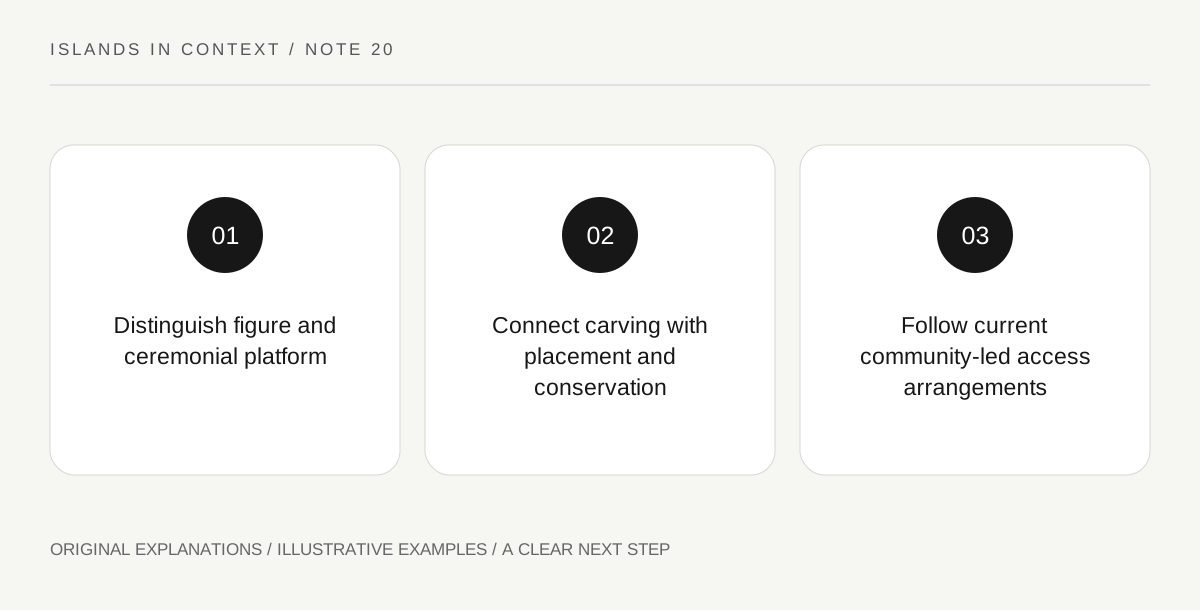
Pacific and Asian islands3 min read
Rapa Nui’s monumental statues are inseparable from a broader landscape of platforms, quarries and community heritage. UNESCO distinguishes moai from ahu and describes conservation challenges. Learning those terms changes a visit from collecting statue images to understanding relationships between making, placement, history and the living people responsible for the place.
Read the guide ↗